
A residential cinema depends on more than a large display and powerful speakers. Behind a convincing viewing experience lies a carefully coordinated system involving structural preparation, signal distribution, image processing, thermal management, and display calibration. An LED video wall for home theater installation introduces additional technical considerations. Its modular architecture differs significantly from conventional projection systems and consumer televisions.
AV professionals must account for these differences before installation begins, particularly when working with premium residential interiors where visual consistency and equipment reliability are equally important. A successful project requires each component to function as part of a unified audiovisual environment.
Structural Planning and Installation Requirements
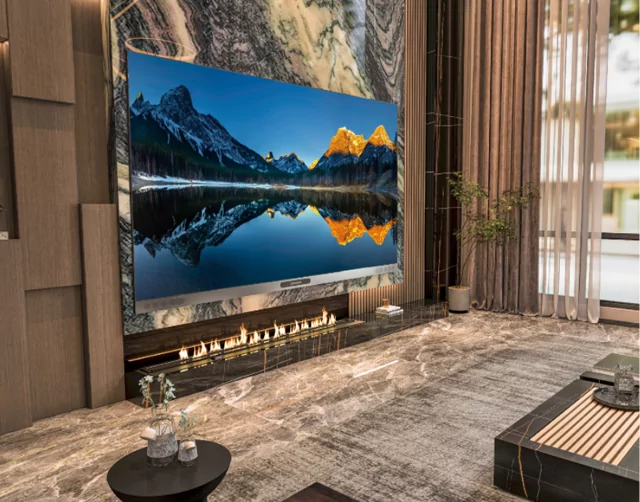
The physical installation begins with an assessment of the supporting wall. Although LED display modules can be assembled into different configurations, their combined weight, mounting structure, and service requirements must be evaluated against the building’s construction. Concrete, brick, timber framing, and lightweight partition walls offer different load-bearing characteristics. An AV installer should examine the wall composition, identify suitable fixing points, and determine whether additional reinforcement is necessary before specifying the mounting framework.
Dimensional accuracy is another essential part of preparation. The available wall area, screen aspect ratio, viewing distance, and seating arrangement influence the final display configuration. A large-format installation should maintain appropriate proportions within the room rather than occupying space without considering the surrounding architecture. Measurements should also account for ventilation gaps, cable pathways, access panels, and the clearance required for future maintenance. These details are particularly important when the display is integrated into decorative wall panels or custom cabinetry.
Thermal conditions deserve attention during the structural design stage. LED modules, power supplies, and processing equipment generate heat during operation, while enclosed residential installations may restrict natural airflow. The installer should evaluate ventilation routes, ambient temperature, equipment spacing, and the location of external processing components. A properly planned video wall for home cinema applications should provide sufficient space for heat dissipation without compromising the intended interior appearance.
Signal Chain Design and System Compatibility
Signal distribution determines how audiovisual content travels from its original source to the display. A typical residential cinema setup may include media players, streaming devices, gaming consoles, AV receivers, video processors, and control systems. Each device introduces potential compatibility requirements involving resolution, frame rate, color format, and connection standards. Before installation, the technical team should map the entire signal path and identify the capabilities of every component.
Cable selection should reflect both transmission distance and bandwidth requirements. HDMI connections are common in residential entertainment environments, although longer cable runs may require active optical HDMI or other suitable signal-extension solutions. For installations involving multiple sources, an HDMI matrix or dedicated video processor can simplify input switching and signal management. The selected equipment should support the required video formats throughout the complete transmission chain rather than relying solely on the specifications of the display itself.
Signal processing also affects the final image. An LED controller or compatible video processor handles tasks such as image scaling, mapping, input management, and synchronization between display modules. Incorrect configuration may result in cropped content, inconsistent proportions, or visible alignment problems. For an LED video wall for home theater, the installer should verify the processor’s output resolution, cabinet mapping configuration, refresh settings, and compatibility with the source equipment before conducting final image tests.
Display Calibration and HDR Configuration
Calibration transforms the assembled display from a collection of individual modules into a visually consistent screen. Initial adjustments generally involve checking module alignment, brightness uniformity, color temperature, grayscale performance, and gamma response. Even when individual panels come from the same production batch, small variations can become noticeable across a large viewing surface. Professional calibration equipment helps technicians identify these differences and make corrections based on measured performance rather than visual estimation alone.
Color management requires particular attention in a private cinema environment. White balance, grayscale tracking, and color gamut settings influence how films and television content appear under different viewing conditions. Excessive brightness may cause discomfort in a dark room, while inappropriate gamma settings can obscure shadow details. Calibration should reflect the intended viewing environment, including ambient lighting, screen dimensions, seating distance, and the characteristics of the installed display technology.
HDR configuration introduces another layer of technical complexity. Formats such as HDR10 and Dolby Vision have different processing and metadata requirements, so the source device, AV receiver, processor, and display system must support the intended format. Peak brightness, black-level behavior, color volume, and tone mapping all influence HDR reproduction. An installer should verify format compatibility and test representative content across different brightness levels. A properly configured video wall for home entertainment system should reproduce highlights and darker scenes without creating excessive clipping or losing important image details.
Conclusion
A residential LED cinema installation is ultimately a coordination exercise involving building conditions, audiovisual engineering, and interior design. Technical decisions made before the display reaches the wall can influence image quality, maintenance accessibility, and long-term operating stability. By addressing structural preparation, signal compatibility, calibration, and system integration as interconnected tasks, AV professionals can deliver a more reliable entertainment environment.
Ledman reflects the growing interest in large-format residential displays, where immersive viewing and architectural presentation are considered together. A carefully documented installation gives homeowners a clearer understanding of the system while providing a practical foundation for future servicing and upgrades.