
Industrial hardware programs rely on dependable processing cores that balance execution speed, power efficiency, and stable delivery. Designing modern electronic assemblies involves aligning circuit requirements with available component models before committing to layout fabrication. Any disconnect between schematic decisions and commercial sourcing risks delaying full-scale production runs.
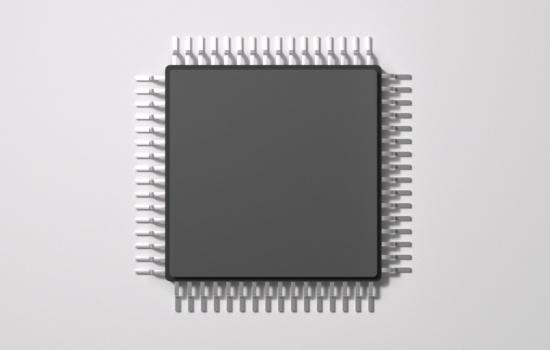
Selecting an embedded microcontroller requires evaluating arithmetic capabilities alongside board-level physical parameters. Engineers frequently review technical attributes such as processor clock frequency, memory density, and peripheral support to ensure deterministic operation across industrial environments. Identifying hardware that satisfies both functional limits and budget thresholds keeps development cycles on track.
Engineering teams often encounter procurement hurdles after completing circuit board prototypes. Securing volume components through authorized channels demands equal attention to product specifications and vendor credibility. Successful product launches depend on uniting verified component performance with disciplined global procurement practices.
Core Computational Architecture and Memory Allocation
Fabricated by STMicroelectronics, the architecture centers on an ARM Cortex-M4 32-bit core capable of operating at clock speeds up to 168 MHz. This computational headroom allows the core to manage real-time control algorithms, continuous telemetry sampling, and communication stacks without latency spikes. Fast internal processing supports uninterrupted task scheduling across complex operational states.
Program storage demands careful resource planning during firmware development. Featuring 1 MB of integrated Flash memory alongside 192 KB of internal RAM, the STM32F405RGT6 accommodates substantial embedded firmware images and extensive variable buffers. Combining generous on-chip memory eliminates the board area and routing complexity associated with external memory devices.
Internal data handling operates across integrated direct memory access channels, relieving the central processing unit from routine data transfer duties. Hardware timers, pulse-width modulation blocks, and watchdog monitors maintain system stability during uninterrupted continuous operations. Brown-out reset circuitry safeguards device states during unexpected electrical disturbances.
Operating supply rails range from 1.8 V to 3.6 V, offering broad compatibility with modern low-voltage power distribution designs. Reduced operating voltages lower overall energy consumption in compact control enclosures. Regulated power consumption simplifies surrounding regulator topologies and reduces board-level thermal dissipation requirements.
Peripheral Interfacing and Mechanical Package Constraints
Communication buses define how effectively a microcontroller coordinates with external transceivers, intelligent sensors, and field controllers. Integrated hardware channels support CANbus, I2C, SPI, and UART or USART protocols, enabling flexible multi-node networking. Specialized LINbus and USB OTG connectivity allow seamless integration into industrial automation networks and instrumentation benches.
System integration relies heavily on configurable pin assignments to route signals efficiently across dense printed circuit boards. Offering up to 51 general-purpose input/output lines, the STM32F405RGT6 allows flexible peripheral multiplexing to accommodate diverse mixed-signal circuit architectures. Designers route critical communication paths while keeping high-speed traces isolated from susceptible analog signals.
Thermal dissipation characteristics remain critical when packing complex processing capabilities into space-constrained housings. Housed in a standard 64-LQFP package, the physical package supports surface-mount assembly processes compatible with automated high-speed placement equipment. Standardized lead pitches facilitate straightforward solder joint inspection during automated optical and manufacturing checks.
Compliance standards dictate manufacturing suitability across regulated commercial and industrial sectors. An operating temperature rating spanning from -40 °C to +85 °C ensures reliable functionality under harsh environmental conditions. Lead-free construction and RoHS compliance satisfy international environmental directives without requiring post-manufacturing exemptions.
Supply Chain Volatility in Embedded Manufacturing
Extended production schedules expose OEM projects to global component allocation imbalances and unpredictable delivery lead times. Unexpected factory shutdowns or sudden surges in component demand often disrupt scheduled assembly schedules. Purchasing teams must anticipate market fluctuations rather than relying exclusively on spot-market purchasing after shortages occur.
Gray market channels introduce dangerous risks of compromised or remarket components during tight supply cycles. Substandard integrated circuits can cause premature field failures, degraded system performance, and expensive warranty claims. Rigorous supply chain oversight protects manufacturing lines from unverified stock entering high-reliability product assemblies.
Reliable procurement channels mitigate assembly interruptions by securing traceable inventory from approved distribution networks. Unibetter distributes a wide range of electronic components, maintaining established logistics pipelines to resolve supply constraints. Working with verified distributors helps original equipment manufacturers navigate market fluctuations while protecting baseline production schedules.
Maintaining buffer inventory ensures manufacturing continuity during unexpected delivery disruptions. Engaging an experienced MCU supplier early in the design cycle allows procurement departments to align purchasing forecasts with actual fab production runs. Planned scheduling prevents line-down situations and preserves predictable manufacturing budgets over extended product life cycles.
Criteria for Selecting an MCU Supplier
Securing volume microcontroller allocations demands comprehensive auditing when choosing a qualified MCU supplier for critical projects. Sourcing departments examine inventory transparency, warehouse storage standards, and logistics efficiency before committing to purchase orders. A dependable partner provides predictable delivery schedules that protect ongoing factory operations from unforecasted supply disruptions.
Ensuring Component Authenticity and Quality
Traceability serves as the primary defense against substandard or counterfeit components entering manufacturing assembly lines. Unibetter sources and procures electronic components from franchised sources to guarantee 100% authentic, quality-assured and brand-new electronic components. Verifiable sourcing protects electronic assemblies from component degradation and maintains compliance with strict manufacturing quality guidelines.
Optimizing Procurement Costs and Supply Chain Stability
Strategic sourcing partnerships address both price volatility and component availability throughout demanding product lifecycles. Working alongside Unibetter supports customers to locate needed electronic components and acquire them at lower costs across shifting manufacturing cycles. Cost optimization combined with verified provenance enables manufacturers to maintain healthy margins without sacrificing component integrity.
Long-term commercial success requires balancing sound hardware engineering with disciplined component procurement execution. Selecting proven microcontrollers provides the technical baseline, while structured vendor relationships guarantee stable component availability. Coordinating engineering requirements with authentic distribution partnerships ensures electronic products transition smoothly from initial prototyping to high-volume market delivery.