
Modern interiors increasingly use concealed and integrated illumination to add depth without overwhelming the surrounding design. Curved ceilings, illuminated niches, decorative edges, and feature walls all benefit from lighting that can follow architectural contours.
A well-specified silicone LED strip light offers designers flexibility in shaping these details, while LEDIA Lighting provides lighting options for projects that require both visual appeal and practical performance.
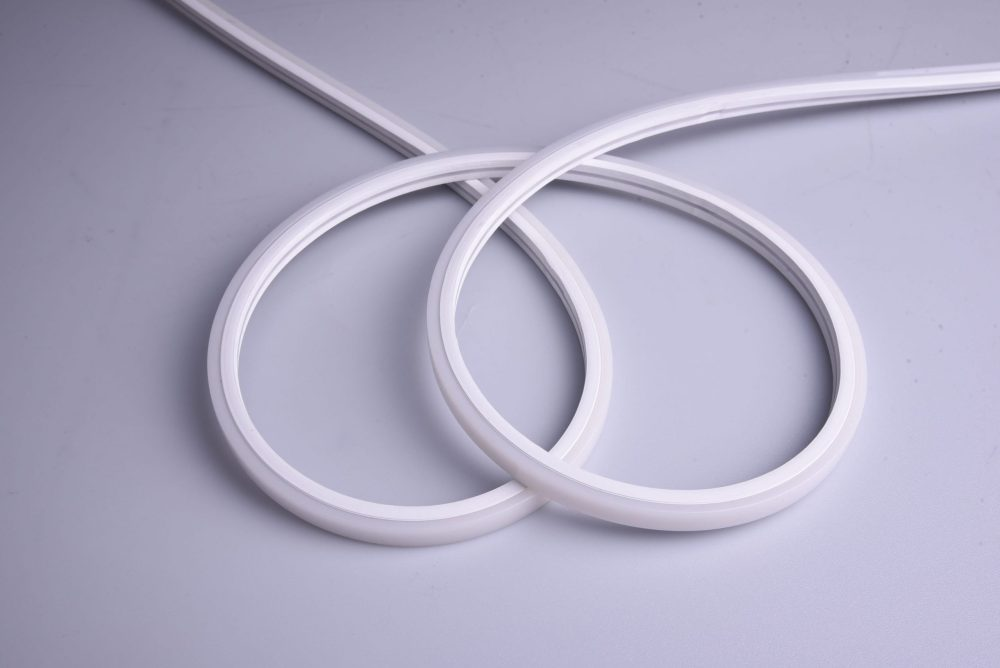
Where Silicone Strip Lighting Fits Into Interior Design
Architectural lighting is often most effective when the source remains discreet. Light recessed into ceiling coves can create a soft perimeter glow, while strips installed behind wall panels add depth through indirect illumination. These arrangements help define spatial boundaries without relying on prominent fixtures.
Furniture and decorative elements offer further possibilities. Illuminated shelving, display niches, kitchen details, and wardrobe edges can combine functional visibility with a subtle visual effect. The final appearance depends on the distance between the strip and the illuminated surface, as well as the reflectivity and colour of the surrounding materials.
Curved features require particular attention to the strip’s construction. Some installations follow gentle bends around columns, arches, or rounded furniture, while others need a specific bending direction to maintain a consistent light line. Designers should check the manufacturer’s minimum bend radius and permitted bending method rather than assuming every strip can follow any shape.
Understand Construction, Light Output, and Visual Quality
Silicone-based lighting products are available in different extrusion structures, including solid and hollow profiles. Their physical construction affects flexibility, dimensions, heat behaviour, and installation requirements. A hollow extrusion may offer a different balance of material use and flexibility from a solid design, so the cross-section should be reviewed before the product is specified.
The optical appearance is another important consideration. LED spacing, internal diffusion, extrusion shape, and viewing angle influence whether the illuminated surface appears continuous or shows visible points. A sample installation can help designers evaluate the effect at the intended viewing distance, particularly in feature areas that remain visible throughout the day.
Brightness should be matched to the purpose of the installation. Decorative coves may require a softer output than task-oriented areas, while display niches may need enough illumination to reveal material texture and product details. Comparing lumens per metre, power consumption, and beam distribution provides a more useful basis for specification than relying on wattage alone.
Colour temperature and colour rendering also shape the result. Warm white can complement timber, stone, and residential finishes, whereas neutral white may suit contemporary commercial interiors. Where the lighting falls directly on fabrics, artwork, or coloured surfaces, CRI should be considered to assess how naturally those materials will appear.
Plan Installation Around Environment and Safety
The installation environment determines which construction and protection characteristics are necessary. Indoor decorative details may face relatively stable conditions, but lighting near windows, glazed façades, or exterior-facing architectural features can experience stronger sunlight and temperature changes. UV resistance becomes relevant in locations exposed to prolonged ultraviolet radiation.
Flame resistance is another specification worth examining, particularly in projects with defined material-safety requirements. Buyers should review the exact test standards and documentation behind any fire-related claim. A material description alone does not establish the fire classification of the entire lighting assembly or finished installation.
Electrical planning should cover voltage, power supply capacity, wiring length, and connection arrangements. The strip’s rated voltage must match the driver, while the total load should account for the installed length. Long runs may experience voltage drop, so the manufacturer’s recommendations for power injection and maximum connection length should be followed.
Mounting conditions can influence both reliability and appearance. The substrate should be clean, stable, and suitable for the selected fixing method. Profiles, clips, adhesives, and end connections need to be compatible with the extrusion design, especially where the strip follows a curved surface or passes through a narrow architectural recess.
Evaluate Durability and Long-Term Maintenance
A lighting installation should be assessed beyond its initial appearance. Operating temperature, exposure to sunlight, installation stress, and daily usage patterns can all affect service life. Buyers should request technical information covering rated operating conditions, material properties, warranty coverage, and recommended installation practices.
A flexible silicone LED strip may be considered for projects involving curved decorative details, but flexibility alone does not determine suitability. The extrusion’s dimensions, bend direction, minimum radius, voltage, and output still need to match the intended design. A mock-up can reveal installation difficulties before the lighting is fitted across an entire room.
Maintenance access deserves attention during the design stage. Drivers, connectors, and power-feed points should remain accessible, even if the illuminated section is concealed. In commercial interiors, accessible components can reduce disruption during repairs and make future replacement more manageable.
LEDIA Lighting’s LD-FR-SJS-DC24V-XXXX-144-12*12mm Neon Flex uses a hollow-extrusion structure and is specified with UV and flame resistance. The model is supplied with a five-year warranty, making those documented characteristics relevant to buyers assessing decorative installations and their expected service conditions. Project teams should consult its full datasheet for additional electrical, optical, dimensional, and installation details.
Conclusion
Silicone-based linear lighting can support a wide range of interior effects, from understated ceiling details to illuminated furniture and sculptural architectural features. Its success depends on more than flexibility: construction, light quality, environmental exposure, electrical compatibility, and maintenance access all influence the finished installation. A suitable silicone LED strip light should be selected according to the actual shape and operating conditions of the project.
For curved or integrated details, a flexible silicone LED strip can provide an alternative to conventional rigid fixtures, provided its technical limits are understood before installation. LEDIA Lighting offers options such as hollow-extrusion neon flex for projects with specific design and material requirements. Reviewing product documentation and testing a sample in the intended setting can help translate an interior concept into a dependable lighting installation.