
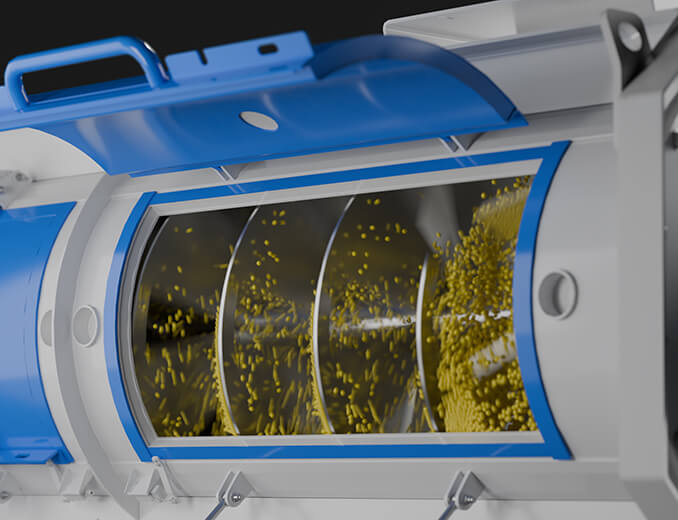
Achieving precise particle size distribution is a core requirement for efficient animal production. When processing feed, the technical characteristics of the milling grinding stage directly dictate the quality of the final product. FAMSUN emphasizes how these mechanical parameters influence biological outcomes for livestock.
The Role of Particle Size in Feed Consistency
A common technical challenge involves managing the Coefficient of Variation (CV%) during the reduction process. When a feed grinding machine operates without adequate control, the output shows significant variations in particle dimensions. This variability creates a scenario where animals consume different nutrient ratios based on their specific feeding habits. Data suggests that when a feed grinding machine produces inconsistent grinds, high CV% values emerge as a frequent concern. This outcome leads to erratic nutrient and drug intake, as smaller particles may settle or be consumed preferentially, which disrupts the intended dietary balance.
Addressing Flock Uniformity Through Technical Control
Biological uniformity in a flock is linked to the physical consistency of the diet provided. If the feed texture varies due to improper milling grinding parameters, it becomes difficult for animals to achieve steady growth rates. Observed data confirms that high CV% in feed particles prevents uniform development across a group. When nutrient intake is not homogenized, certain animals may receive inadequate dosages, which directly impacts their development trajectory.
FAMSUN develops equipment designed to minimize this variability. By focusing on the mechanical precision of the size reduction process, production facilities can reduce the CV% and ensure every portion of feed contains the correct proportion of ingredients. This level of technical control prevents the performance gaps often observed in flocks where feed consistency is not managed effectively.
Consistency in size reduction serves as a pillar for reliable animal production. By utilizing established technology to monitor and control particle dimensions, operators mitigate the risks associated with high CV% and support better flock uniformity. A focus on these specific technical details remains a priority for those seeking predictable and stable production results in the animal nutrition sector.